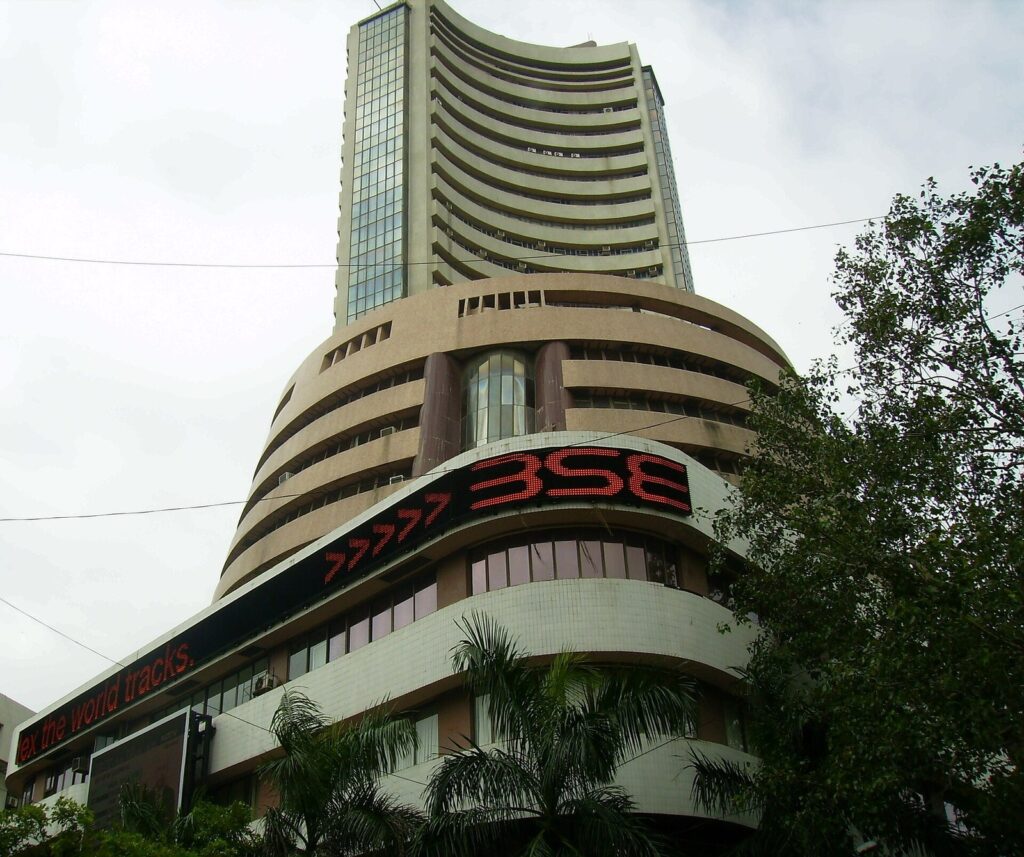
Indian equities saw buying for a second consecutive trading session on Tuesday, 6 October. The BSE Sensex jumped 685.34 points, or 0.95 per cent, to close at 73,067.81, while the NSE Nifty rose 220.35 points, or 0.98 per cent, to 22,776.10. The gains came ahead of the Reserve Bank of India’s (RBI) Monetary Policy Committee decision on interest rates, due on Wednesday, 7 October.
A day earlier, on Monday, 5 October, the Sensex had closed at 72,382.47, up 472.77 points, while the Nifty gained 133.80 points to end at 22,555.75. That session’s gains ended a run of four consecutive declines. The market had recorded a sharp fall in September.
Stocks and sectors in focus
According to news agency ANI, Trent, Kotak Mahindra Bank, Hindustan Unilever, Reliance and IndiGo were among the major gainers on the BSE on Tuesday, while Tech Mahindra, Titan, ITC, Infosys and TCS came under pressure. Business Standard reported that the Nifty Midcap and Nifty Smallcap indices rose 1.08 per cent and 1.56 per cent respectively. Among sectors, pharma and chemical indices led the gains, while the IT index was the weakest.
ANI quoted market analyst Vipin Dixena as saying the move should, for now, be viewed as a relief recovery rather than a confirmed change in trend. According to him, Brent crude is near $100 a barrel, the rupee has weakened to around 96.4 against the dollar and foreign investors continue to sell. These factors could limit the rally.
What to expect from the RBI
The RBI’s six-member Monetary Policy Committee (MPC) has been meeting since 5 October. Governor Sanjay Malhotra will announce the decision at 10 a.m. on 7 October and address the media at noon. At its previous meeting in August, the committee left the repo rate unchanged at 5.25 per cent and maintained a ‘neutral’ policy stance.
Several economists see the possibility of an interest-rate increase this time. According to an IANS report, HSBC’s chief India economist Pranjul Bhandari has reiterated her forecast of 25-basis-point increases at each of the October and December meetings, which could take the repo rate to 5.75 per cent. Government figures showed retail inflation rising to 4.82 per cent in August from 4.45 per cent in July. Food inflation stood at 5.95 per cent.
If the committee raises the repo rate, it will be the first increase since February 2023. If banks pass on the effect of a repo-rate increase to customers, interest rates on floating-rate loans linked to external benchmarks could rise. The final decision will depend on the committee’s assessment on 7 October.
Photo: Niyantha Shekhar / Wikimedia Commons (CC BY 2.0)